
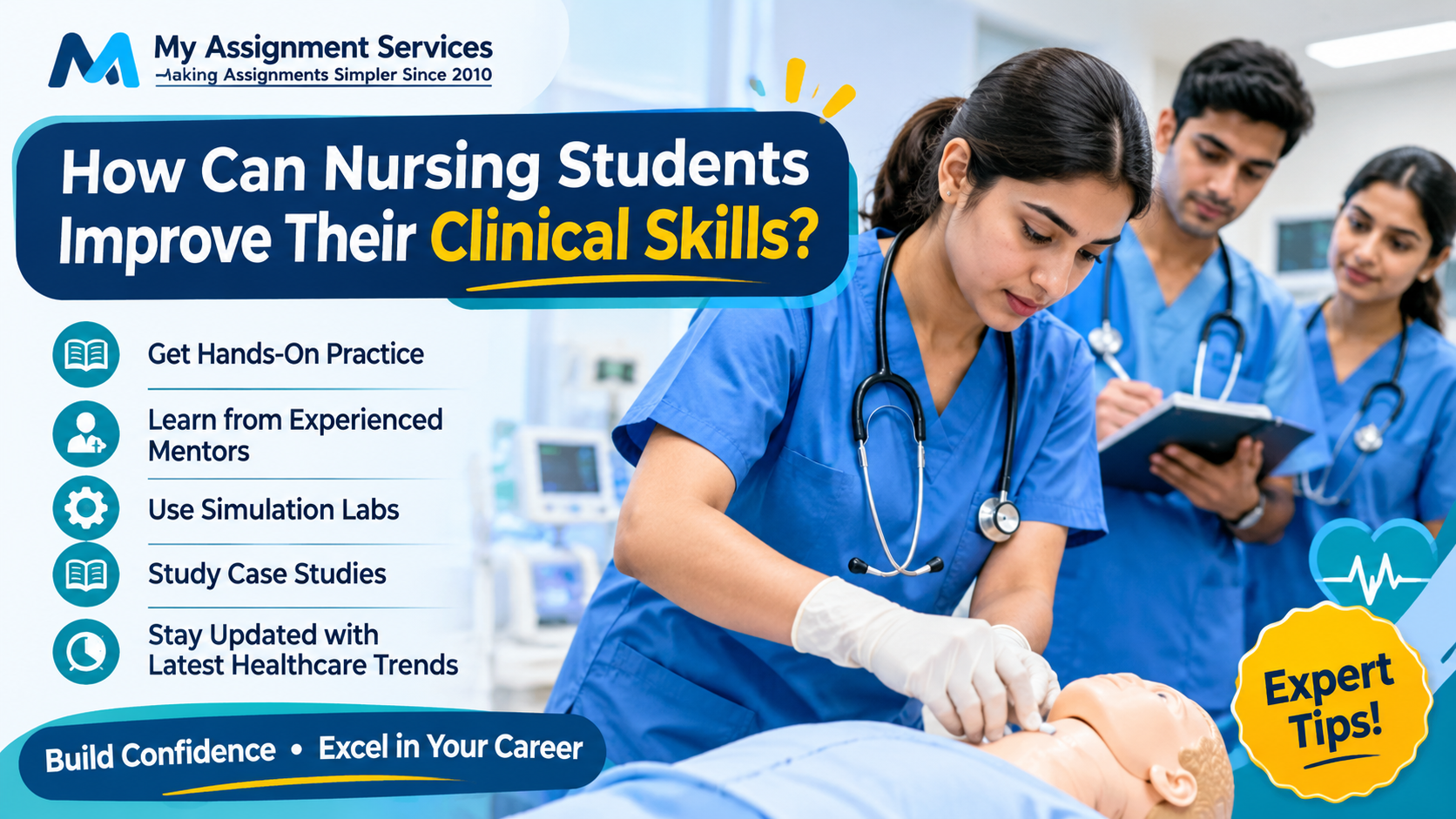
How Can Nursing Students Improve Their Clinical Skills?
Transitioning from classroom theory to hands-on clinical practice is one of the most challenging and transformative phases of nursing education. While lectures and textbooks build essential knowledge of anatomy, pathophysiology, and pharmacology, true clinical competence requires translating that knowledge into confident, accurate, and compassionate bedside actions under real-world time pressures.
For nursing students, improving clinical skills goes far beyond memorising procedural checklists. It involves developing psychomotor precision, sharp clinical reasoning, structured communication, and emotional resilience. By combining deliberate simulation practice, proactive clinical placement engagement, peer collaboration, and disciplined self-reflection, learners can bridge the theory-practice gap and prepare safely for professional registration.
Maximising Clinical Simulation Labs and Deliberate Practice
Modern university simulation suites provide a safe, controlled environment where students can practice high-risk clinical procedures such as aseptic non-touch technique (ANTT), venepuncture, catheterisation, airway management, and acute deterioration escalation without risking patient harm. However, simply attending scheduled laboratory sessions is rarely enough to build muscle memory.
Students accelerate psychomotor proficiency through deliberate, repetitive practice. Breaking complex procedures down into sequential steps, verbalising the physiological rationale behind each action, and practising under timed conditions prepare learners for Objective Structured Clinical Examinations (OSCEs) and acute ward emergencies. Treating simulation manikins with the same therapeutic communication, consent verification, and infection control standards as real patients reinforces safe clinical habits early.
Engaging Proactively During Clinical Placements
Clinical placements offer invaluable exposure to real patient complexity, multidisciplinary teamwork, and fast-paced ward routines. Students who gain the most from placements adopt an active, inquisitive mindset rather than waiting passively to be assigned routine tasks.
Setting clear daily learning objectives with a practice supervisor or assessor such as mastering fluid balance calculations, conducting a structured admission assessment, or leading a bedside handover creates focused opportunities for growth. Observing experienced nurses closely, asking thoughtful questions about clinical decision-making, and seeking immediate constructive feedback after procedures help refine technique rapidly. Balancing exhausting placement shifts with academic deadlines can be demanding; accessing reliable nursing assignment help allows students to connect their practical placement experiences with peer-reviewed literature, structure case reflections clearly, and meet university grading rubrics without compromising clinical focus.
Strengthening Clinical Reasoning and Pattern Recognition
Technical dexterity must always be paired with sound clinical judgment. Knowing how to record vital signs accurately is only useful if a student understands what subtle physiological trends signify. Strengthening clinical reasoning requires consistently linking bedside observations to underlying pathophysiology.
Using structured cognitive frameworks such as the Clinical Reasoning Cycle or the ABCDE (Airway, Breathing, Circulation, Disability, Exposure) assessment model helps learners organise cues systematically. Whenever encountering an unfamiliar diagnosis or medication on placement, reviewing its mechanism of action, potential adverse effects, and nursing monitoring priorities immediately after the shift cements long-term clinical pattern recognition.
Mastering Structured Communication and Bedside Confidence
Effective clinical skill execution relies heavily on clear communication with both patients and interdisciplinary colleagues. Many students feel hesitant speaking up during ward rounds or escalating subtle patient deterioration to senior medical staff.
Practising structured communication frameworks like SBAR (Situation, Background, Assessment, Recommendation) builds confidence and ensures urgent clinical concerns are conveyed concisely without ambiguity. At the bedside, explaining procedures in plain, reassuring language, maintaining calm body language, and practising active listening build patient trust making physical assessments and interventions smoother and less stressful for both the patient and the student.
Cultivating Reflective Practice and Evidence-Based Inquiry
Sustainable clinical growth depends on honest self-evaluation after every shift. Using structured models such as Gibbs’ Reflective Cycle or Rolfe’s Framework allows students to analyse clinical encounters objectively examining what went well, identifying knowledge gaps, and formulating concrete action plans for future practice.
Additionally, anchoring clinical habits in current research ensures students do not adopt outdated ward routines. Evaluating clinical guidelines and quality improvement literature strengthens critical appraisal abilities throughout degree programmes. When progressing to advanced literature reviews or final-year research projects, scholars frequently seek specialized nursing dissertation help uk to structure empirical methodologies, evaluate clinical practice outcomes, and produce rigorous academic work aligned with professional standards.
Conclusion
Improving clinical skills as a nursing student requires a deliberate blend of simulation rehearsal, proactive placement learning, critical reasoning, structured communication, and reflective discipline. By viewing every patient interaction and clinical challenge as a structured learning opportunity, students develop the technical competence, clinical vigilance, and compassionate confidence needed to transition smoothly into safe, accountable registered practitioners.
21 Nov 2026
21 Nov 2026